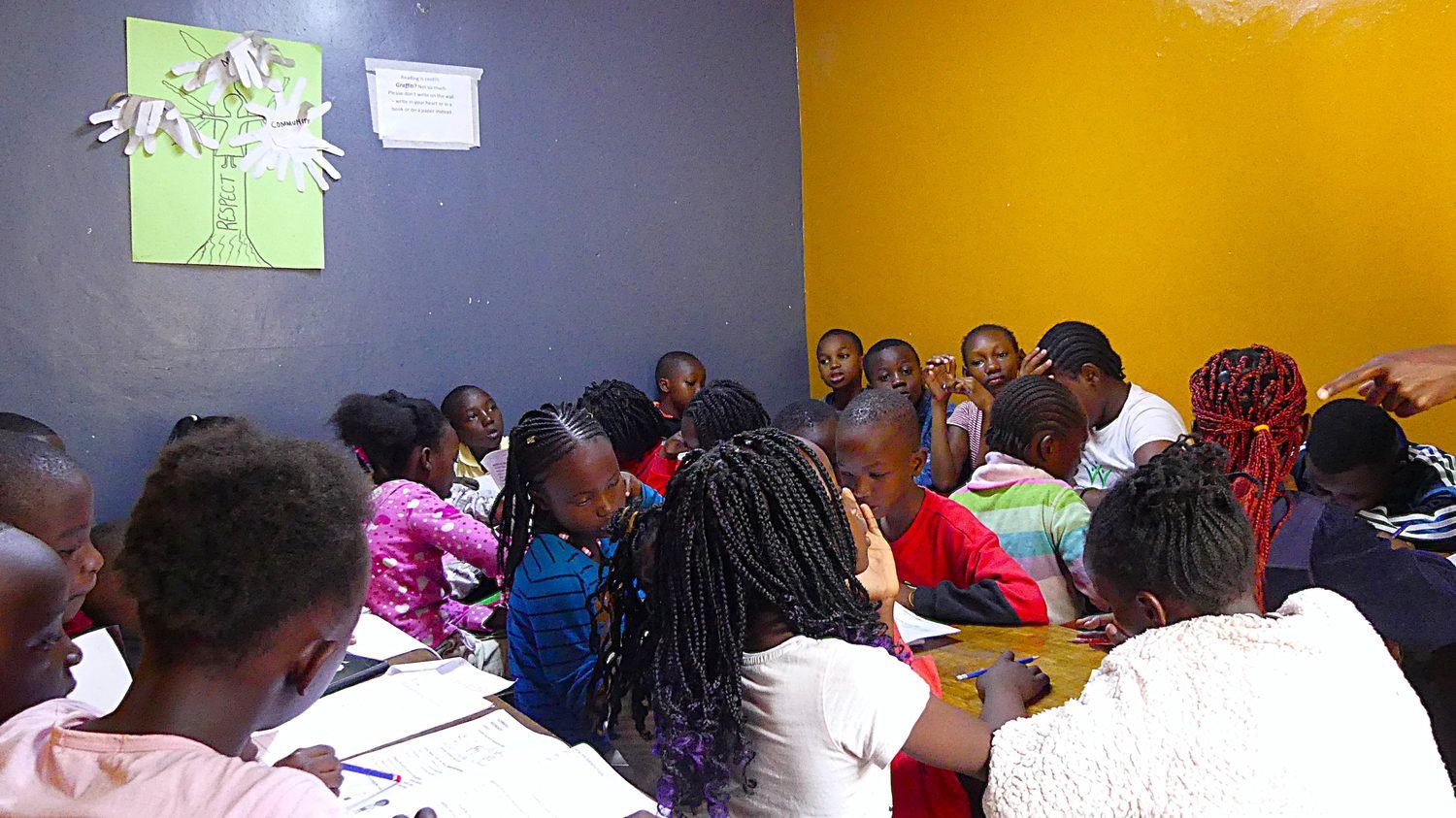
Joan Mwangi began the work that became Rafikistry TLC in 2004, five years before it had a name, a registration, or a single grant. This is the story of how showing up, consistently and for a long time, built the relationships that eventually brought funding.
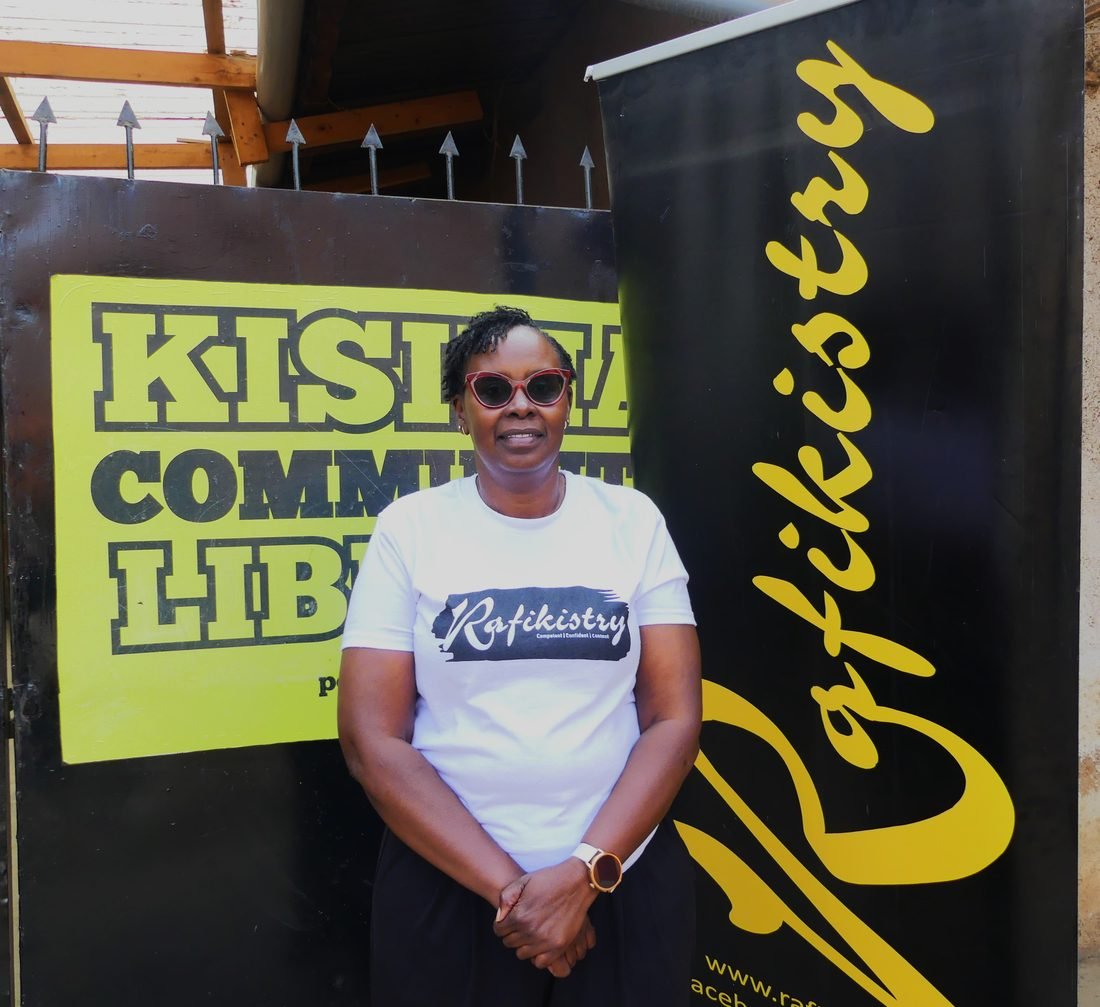
In the early 2000s, Joan Mwangi stood in front of training rooms full of adults, teaching them about HIV and AIDS. She was good at it. It was the questions that stopped her.
They were not difficult questions. They were basic ones, about bodies, about how infection actually moves from one person to another. The kind of thing, she thought, a person should have learned as a teenager, not be asking for the first time as an adult in a workshop. The gap was not in the training. It was in the timing.
This was 2004 to 2009, when HIV had hit Kenya hardest, and she kept watching adults arrive in her sessions carrying questions they should have been able to answer as teenagers. Her argument was simple. If people only learn these things as adults, the work starts too late. The information had to reach them younger.
She did not set out to found an organisation. She set out to correct something. So she went looking for rooms full of young people, and churches had them. Many were running team-building days or church seminars for their members, and Joan offered a simple addition: while the adults did their team-building or seminar, give her an hour or two with the young ones. No fee. Just a conversation, pitched at their age, about the things she wished the adults in her workshops had known at fifteen.
In those early years her rule was simple. Hold the conversations wherever the cost to her was zero. If a church invited her somewhere and covered the transport, the meals, and the accommodation, she went. One invitation took her all the way to Mombasa on exactly those terms. The work ran on a zero budget, and that was the point. She was proving the need long before she asked anyone to fund it.
Rafikistry TLC was formally registered as an NGO in 2009, five years after the activities began. Today it works with teenagers, adolescents, and young mothers in Nairobi, offering life skills, mentorship, economic empowerment, and a community library stocked almost entirely through donated books.
From the first church talk to the first institutional grant, fifteen years would pass.
The first institutional grant did not arrive for another decade. When it came, it came the way Joan describes most good things in this work. Through a person, not a portal.
The funder is a small Netherlands-based private foundation, abbreviated SGH. It is, by Joan’s account, almost impossible to find. No website. No real online presence. A Dutch name rather than an English one. You can search for it and come away with nothing. The only reason Rafikistry knew it existed is that someone knew someone who sat on its board.
In 2019, ten years after registration, one of those board members was in Kenya to check on another project the foundation already supported. While she was in the country, she decided to pass by the Rafikistry office. She sat down with Joan, asked about the work, and then put the question that could have ended the conversation.
It was a fair question. The proposed programme, supporting young mothers with life skills and financial literacy, was a real stretch. Joan did not deflect. She drew a clear line between what was new and what was not.
“We may not have done a project for young mothers,” she told her, “but we have done a great deal of work with teenagers and adolescents. We have provided life skills and mentorship over a ten-year period. If it is about life skills and mentorship, that is not new to us. We already know how to do this, and do it well.”
She named the part that was genuinely new, the economic empowerment and the financial literacy, and made a concrete promise. Rafikistry would bring in people with direct experience in that area to fill the gap. She did not claim expertise she did not have. The honesty landed, and SGH came on board.
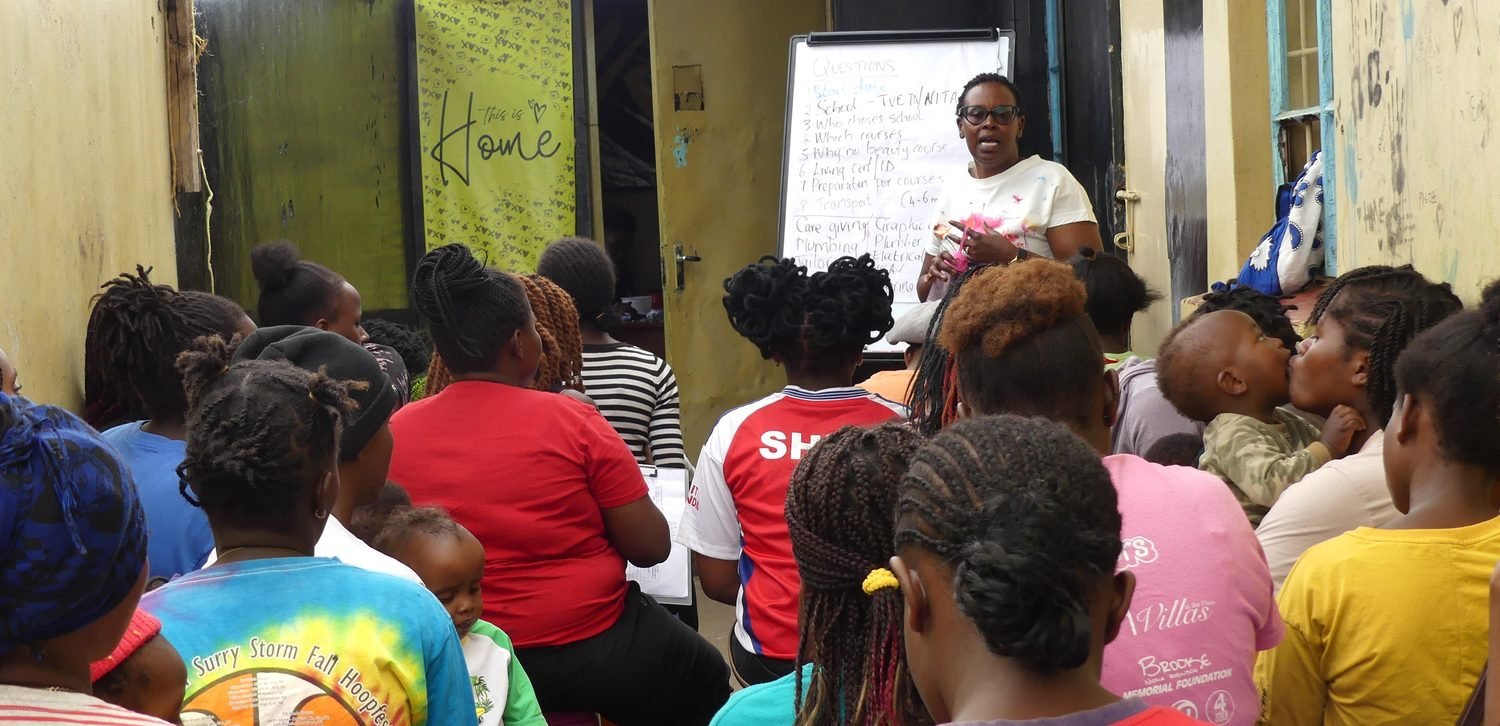
There was a proposal. SGH had their own form, and the first version Joan submitted aimed high, somewhere around 100 to 120 young mothers over eighteen months. The board member came back with a correction Joan did not expect. Too many. You would do better, she said, to work with a few young women and reach them deeply than to spread across very many and barely touch any of them. Across four rounds since, Rafikistry has aimed for thirty to thirty-five over an eighteen-month cycle, and stayed with them.
SGH typically funds three rounds. For Rafikistry, in 2024 to 2025, they agreed to a fourth, something they said they do not do routinely. Their reason was simple. They felt they could understand the work. They could see it.
SGH is not a strict funder. They do not micro-manage, and they do not demand constant contact. Rafikistry decided not to treat that latitude as permission to go quiet.
Every quarter, a technical and a financial report went out, without waiting to be chased. Every so often, a short video of one or two of the young mothers was shared, so that people sitting in the Netherlands could see faces and not only figures. And periodically there were video calls, not to report but to talk.
The Kenya Community Development Foundation, KCDF, came into the picture differently, and shows a quieter kind of trust. The sort built through small, consistent acts over time. Rafikistry attended a KCDF local fundraising training in April 2023. Afterwards, like most organisations that run training, KCDF kept checking in with short surveys, asking which methods were being used and whether they helped.
Many organisations never quite get round to filling those surveys in. Even now, KCDF will post a reminder in the group and only a handful will have responded. Rafikistry responded every time. So when KCDF later announced a Shilling for Shilling matching grant in that same group, Rafikistry was already paying attention. They joined the information meeting, understood exactly what it required, and applied.
KCDF is the stricter of the two. They hand you a structure for how reports should look, and they account for every shilling. For Rafikistry, that was never a problem, because careful accounting was already how they worked. The grant followed an organisational capacity assessment, and that is where the unglamorous work of documentation quietly paid off.
Not all of Rafikistry’s money has come from institutions. Some of the most interesting fundraising in its history started as a walk.
For the tenth anniversary in 2019, Joan planned to walk twenty-five kilometres and ask friends and beneficiaries to support the walk. A board member offered a small reframe that changed everything: rather than asking people to back her walk, she would invite them to walk with her, on foot or financially or both. It worked. People associate a round number with something worth marking, and ten years was exactly that.
When COVID arrived in 2020, Rafikistry did not stop the momentum. They ran a “walk-where-you-are”: people committed to walk five or ten kilometres wherever they happened to be, on an agreed day. The office walked too. Some people joined, some gave. That year, Joan says, they did not fund-raise. They friend-raised.
In 2024 the walk became something else. Paired with the KCDF Shilling for Shilling grant, Rafikistry set out to raise 500,000 shillings, 350,000 in cash and 150,000 in kind, for KCDF to match. Rather than a walk, they held a library gala. An opening, a date in the diary, an invitation to come and see the library, sit with some of the children, and spend a day in the space. They changed the tone from a walk to a celebration.
The library itself is the clearest illustration of the approach. It is fully stocked, and in that round Rafikistry did not buy a single book. The shelves were filled by people. A bookshop gave. A woman who had sold Joan novels for years gave some of the most beautiful storybooks in the collection, and told her to come back whenever she needed more.
Ask Joan about proposals and she laughs. They look quite the same, she says, but they are never quite the same.
Every donor is different. Before she writes anything, she reads what a funder actually funds, and then works out how to speak their language. The project does not change. The framing does.
Her favourite example was a long shot: a football foundation. Rafikistry does not do football, but the funder, on a closer read, was less interested in football than in children playing, and play is something the library does constantly. So she reframed what they already do to meet the funder where they were. She knew it was unlikely. She enjoyed writing it anyway.
Not everything has worked. Corporates, she admits plainly, are still unsolved. She has visited them, called them, texted the numbers she could find. A few prospects remain open, none have said yes, and she has not given up. It is an honest gap in an otherwise patient strategy, and she names it without flinching.
There is a version of this story that is all momentum. This is not that version, and Joan would not want it to be. “I almost want to give up every day,” she says. “But I keep going.”
What keeps her going is partly structure. By handing more of the day-to-day activities to younger team members, she freed up time to write, and this has been the year she has written the most proposals. None has landed yet. She is proud of the work anyway, because the documentation and the discipline behind it are now in place in a way they were not before.
She experiments, and she lets the experiments fail. An income-generating line of bags has not sold well, so they sell them slowly, when people are around. From April she is weighing a small library fee for older users, knowing it may reduce the numbers, because sustainability and resilience now have to sit in the same sentence as reach. After years of meaning to, she finally convened the alumni: texting, calling, the unglamorous work of getting people in a room. It will now be a yearly event.
Asked whether Rafikistry would survive if the grants stopped, she is honest. It would be very difficult. But it would not close. She would go back to individual giving, run a lean budget and lean activities, and hold on. Grants come and go. The individual relationships, and the willingness to do the work on very little, are what keep the lights on.
When the strategy talk runs out, what is left is the reason.
Recently a group of Sudanese children began coming to the library. Several are teenagers, old enough to be in upper primary or starting secondary school, and they cannot yet read. Rafikistry is starting from sounds. The children have spent years in a refugee setting and can hear English, but reading was never opened up to them.
Joan had sensed it before she could prove it. There was a boy who loved the library but disappeared during school terms, and it made her wonder aloud to her team whether a whole community was being quietly left out. It turned out she was right.
She does not frame this as a programme or a funding line. She frames it as the reason the work exists at all.
This is why she keeps writing the proposals that do not land, and filling in the surveys nobody else does. The fundraising is not the point. It is what keeps the doors open for the child who has just learned to read.
We have chosen not to publish a profile of SGH. By Joan’s own account, the foundation keeps almost no public presence: no website, no easily searchable name, a Dutch identity rather than an English one. We will not reconstruct a profile from detail we cannot trace to a named, public source.
What is documentable is the shape of the relationship, and that is the more useful lesson anyway. Small, private, relationship-led, multi-round, and far more interested in depth than in scale. There is no public profile to link. That is rather the point: some of the most committed funding in this sector leaves no trace online. It travels through people.
KCDF is a Kenyan community foundation that strengthens local organisations and mobilises resources for community development across Kenya. Its Shilling for Shilling matching grant is built to grow local fundraising capacity: an organisation raises an agreed amount in cash and in kind, and KCDF matches it. KCDF also runs fundraising training for grassroots organisations and stays in touch with those it trains, tracking who puts the methods to use.
Fundraising & Sustainability Strategist. I founded Realtime Insights to help funders, INGOs, and nonprofits build sustainable funding across Africa.
© 2026 Lucy Njue, CFRE · Realtime Insights. All rights reserved.
lucynjue.com · realtimeinsights.co.ke